Denitrification Of Soil
If the soil is short of air from waterlogging low humus compaction or crusting roots will suffocate or be stunned and the bad guys anaerobic bacteria will take over and release nitrogen denitrification and produce several toxic substances such as hydrogen sulfide ammonia aldehydes and alcohols when they decompose organic matter. Diversity and functions of the microorganisms involved in nitrification and denitrification Masahito HAYATSU.
2

Effect Of Three Nitrogen Fertilizer Sources On Denitrification Rate Under Irrigated Potato Production On Sandy Soils

Role Of Heterotrophic Aerobic Denitrifying Bacteria In Nitrate Removal From Wastewater Rajta 2020 Journal Of Applied Microbiology Wiley Online Library
Vertosols cracking clay soils workability and tillage problems.
Denitrification of soil. Certain soil organisms then start to use nitrate instead of oxygen and denitrification occurs. Pathogenic bacteria cause diseases in plants and a good example are bacteria. Denitrification is the reduction of NO3- to gaseous N2 by anaerobic bacteria.
But things can go wrong. Common Forms of Nitrogen. Waterlogging or drainage problems.
There is a whole different process that does this. Soil also naturally contributes to air pollution by releasing harmful chemical compounds into the atmosphere. Various players in the nitrogen cycle.
Due to slower percolation of water in compacted soil prolonged periods of saturated conditions can occur. These bacteria use nitrate instead of oxygen when obtaining energy releasing nitrogen gas to the atmosphere. The importance of this process as a pathway of N loss in upland cropping systems is evident primarily from mass balance studies in.
Can leach out of the soil enter streams and rivers and ultimately make its way into our drinking water. Michigan State University - Functional Gene Pipeline. Effects of Soil Pollution.
The positive charge prevents ammonium nitrogen from being washed out of the soil or leached by rainfall. Instead it is certain carbon eaters that change the nitrate to nitrogen gas because they need the oxygen. Overall denitrification turns nitrates NO 3 in the soil to nitrogen N 2 which is returned to the air.
Denitrification effects on limiting plant productivity and producing by-products. In denitrification bacteria convert NO 3--N to N gases that are lost to the atmosphere. Denitrification is a good process to have but not in the clarifier.
Efficient N use during the growing season and. Another effect of compaction on soil biota is indirect. Through the denitrification process nitrates are converted to nitrogen gas again.
The model can be used for predicting crop growth soil temperature and moisture regimes soil carbon dynamics nitrogen leaching and emissions of trace gases including nitrous oxide N 2 O nitric oxide NO dinitrogen N 2 ammonia NH 3 methane CH 4. This process only occurs where there is little to no oxygen such as deep in the soil near the water table. The process of denitrification can lower the fertility of soil as nitrogen a growth-limiting factor is removed from the soil and lost to the atmosphere.
Soil electrical conductivity EC is a measure of the amount of salts in salinity of soilsoil. The two stable isotopes of nitrogen 14 N and 15 N are both found in the sediment profiles. Denitrification is important in that it removes fixed nitrogen ie.
Denitrification completes the nitrogen cycle by converting nitrate NO 3- back to gaseous nitrogen N 2Denitrifying bacteria are the agents of this process. The product of denitrification the. Soil nitrate-N is an excellent indicator of N-cycling in soils whether carryover nitrogen used by thewas previous crop and whether additional nitrogen is needed.
These soils are often associated with high levels of organic matter peats. Nitrogen escapes through ammonia volatilization and denitrification. The process of denitrification is not done by the nitrogen microbes.
It is an important. Denitrification can lead to a condition called isotopic fractionation in the soil environment. Nitrogen in the atmosphere N 2 About 80 of the atmosphere is dinitrogen gas which is more or less unavailable to most plants.
So it leaves the soil to go back into the atmosphere. The process takes place in waterlogged soil and with ample organic matter to provide energy for bacteria. On a saturated clay soil as much as 40 to 60 percent of the soil nitrogen may be lost by denitrification to the atmosphere Dick W 2009.
Certain anaerobic bacteria release hydrogen sulfide rotten egg-smell typical of swamps. The denitrification step occurs in a separate anoxic biofilter where the two wastewater streams are combined and allowed to percolate into the soil. For commercial and residential systems that have insufficient carbon for denitrification a supplemental carbon source typically a specially formulated soap is added to the nitrified blackwater.
In the moist Northeast climate nitrate remaining in the soil after the growing season will be lost to leaching or denitrification between crop harvest and the next planting season. The lighter isotope of nitrogen 14 N is preferred during denitrification leaving the heavier nitrogen isotope 15. Denitrifying bacteria decrease the nitrogen fertility of soils by allowing the nitrogen to escape back into the atmosphere.
For these reasons denitrification is generally limited to topsoil. Inherent Factors Affecting Soil Nitrogen Inherent factors such as soil drainage soil texture and slope steepness impact N-transport and N-. Denitrifying bacteria use NO 3--N instead of oxygen in the metabolic processes.
Bacteria in a saturated soil because of poor drainage excessive rainfall or a field depression where water tends to stand use the oxygen from nitrate in place of the oxygen from air. In contrast the negatively charged nitrate ion is not held by soil particles and so can be washed out of the soil leading to decreased soil fertility and nitrate enrichment of downstream surface and groundwater. Soil organic matter Decomposition and mineralisation Plant and microbial uptake Nitrification Nitrogen fixation Leaching to groundwater Denitrification Soil nitrogen gas.
Gas from denitrification under anaerobic conditions 90 or more water-filled pore space by over 15 to 315 fold with relatively high nitrate levels. Soil types and characteristics. Enhanced level of CO 2 in the atmosphere leads to enhancement in plant growth which in turn improves allocation of carbon below the ground rendering the microbial population to accelerate the rate of nitrogen fixation nitrogen immobilization as well as denitrification increased soil aggregation mycorrhizal associations and weathering of minerals Classen et al 2015.
Soil moisture pest pressure and soil compaction. As a result the nitrate N is converted to nitrogen gases N 2 and N 2 O forms unavailable to plants and easily lost to the atmosphere. DNDC ie DeNitrification-DeComposition is a computer simulation model of carbon and nitrogen biogeochemistry in agro-ecosystems.
Philip Robertson in Ecology in Agriculture 1997 C Denitrification. The decomposition of organic materials in soil can release sulfur dioxide and other sulfur compounds causing acid rain. Denitrification is the conversion of soil nitrate to the nitrogen gases N 2 O and N 2 by a diverse array of bacteria that use nitrate as a terminal electron acceptor in the absence of oxygen.
Hence areas such as wetlands provide a valuable place for reducing excess nitrogen levels via denitrification processes.

Pdf Ecology Of Nitrogen Fixing Nitrifying And Denitrifying Microorganisms In Tropical Forest Soils
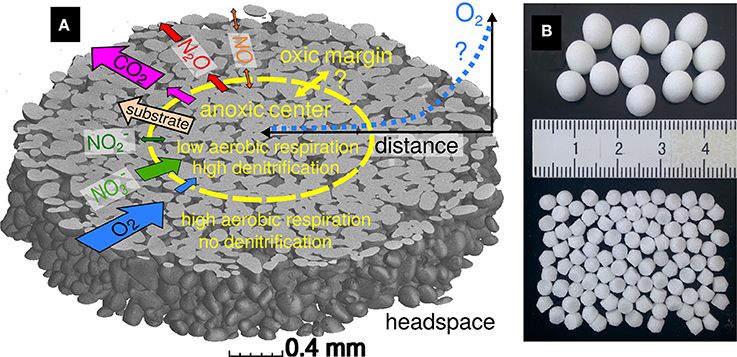
Frontiers Denitrification In Soil Aggregate Analogues Effect Of Aggregate Size And Oxygen Diffusion Environmental Science

Denitrification Wikipedia

Reduce Nitrogen Losses And Increase Nitrogen Use Efficiency Carbon Faming

Effects Of Biological Nitrification Inhibitors On Nitrogen Use Efficiency And Greenhouse Gas Emissions In Agricultural Soils A Review Sciencedirect
1
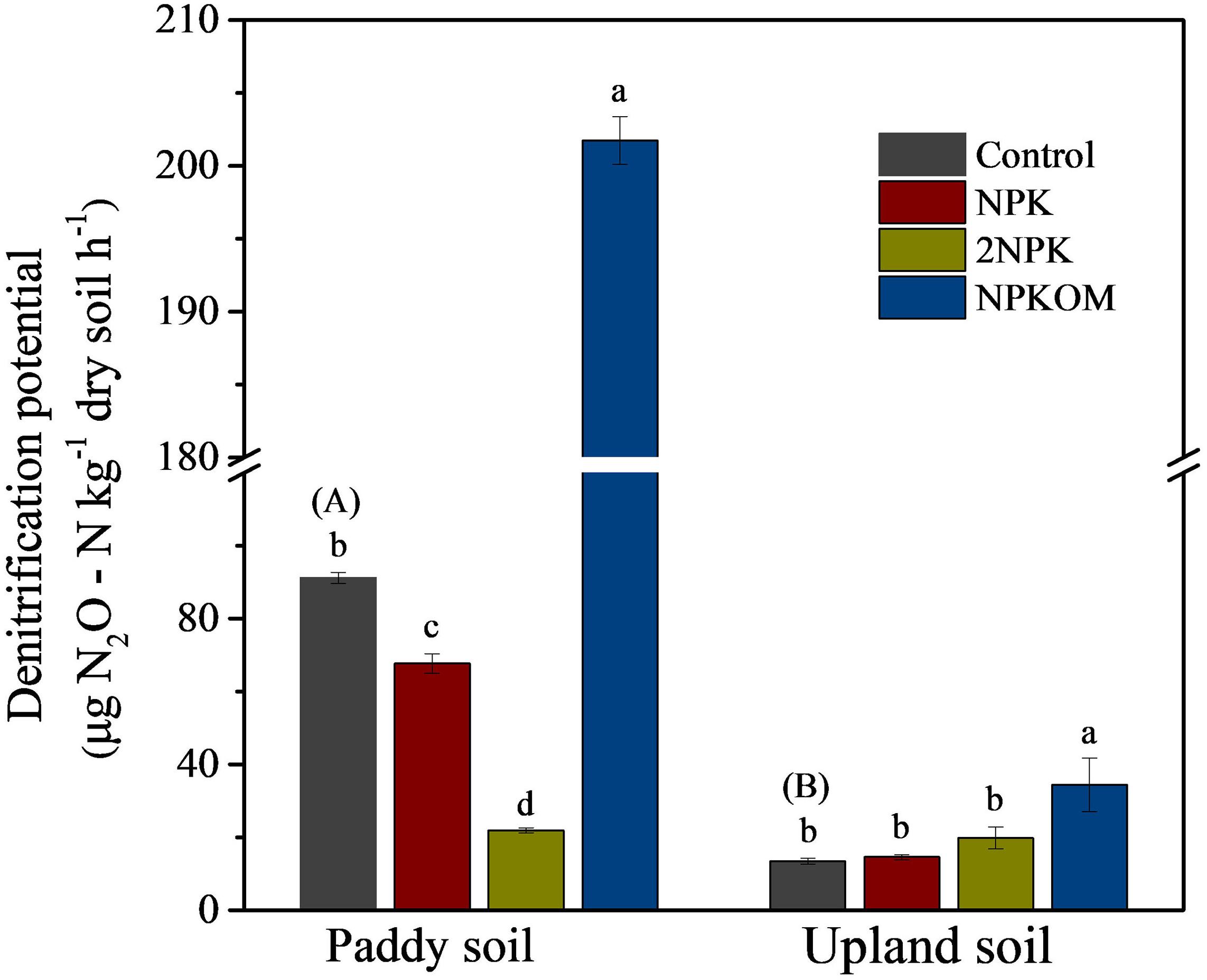
Frontiers Denitrification Potential Of Paddy And Upland Soils Derived From The Same Parent Material Respond Differently To Long Term Fertilization Environmental Science

Response Of Denitrification In Paddy Soils With Different Nitrification Rates To Soil Moisture And Glucose Addition Sciencedirect
Komentar
Posting Komentar