Periodic Table Metals And Nonmetals
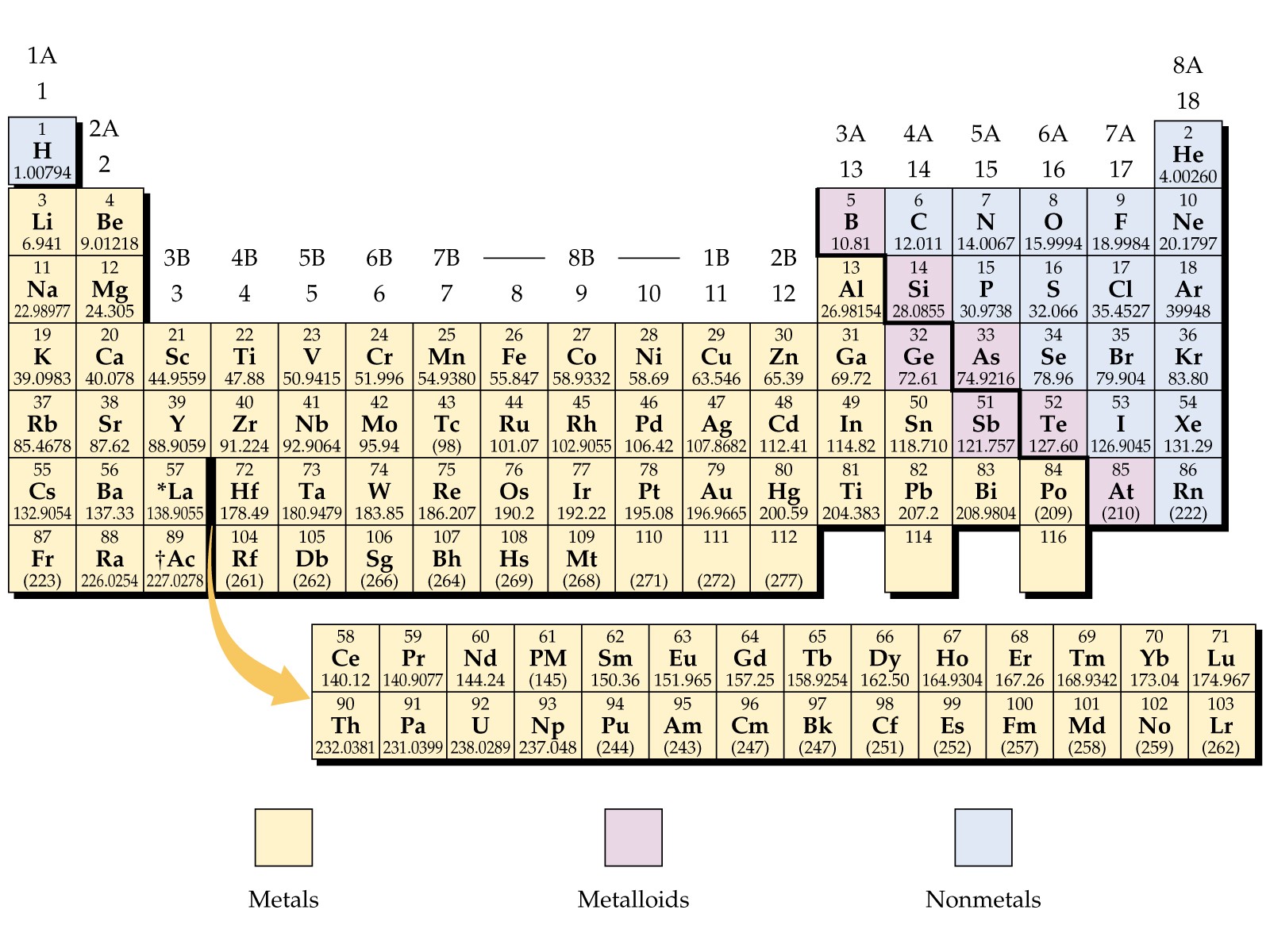
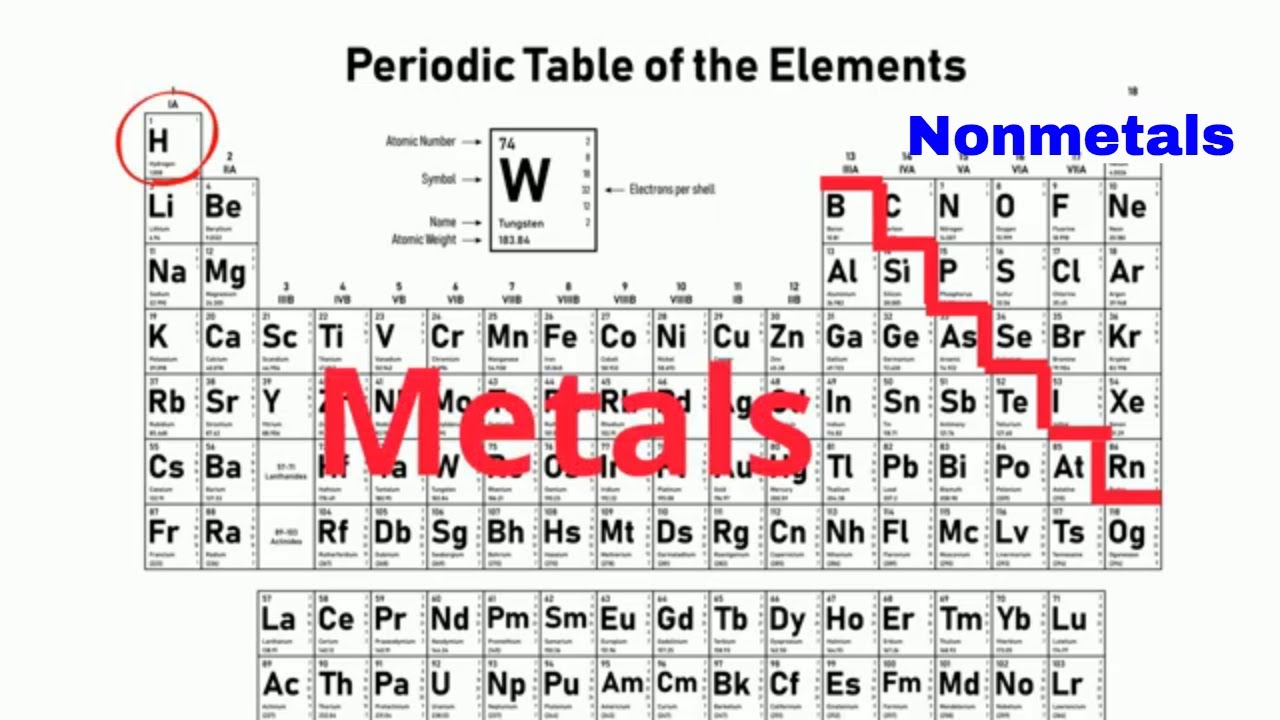
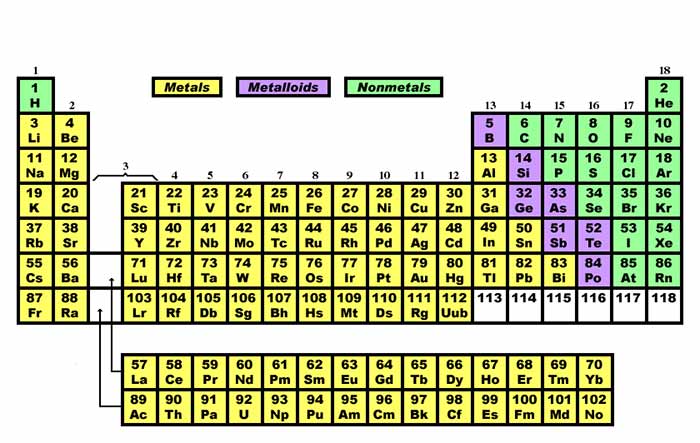
There are multiple ways of grouping the elements but they are commonly divided into metals semimetals metalloids and nonmetals. Elements are further classified into metals non-metals and metalloids based on their properties which are correlated with their placement in the periodic table.
Labeled Periodic Table Of Elements With Name

2 2 Recall The Positions Of Metals And Non Metals In The Periodic Table Igcse2016
1
Youll find more specific groups like transition metals rare earths alkali metals alkaline earth halogens and noble gasses.
Periodic table metals and nonmetals. There are 118 elements known to us out of which 92 are naturally occurring while the rest have been prepared artificially. This gives alkali metals the largest atomic radii in. Hydrogen is a nonmetal which is located on the left top corner of the Periodic table.
Nonmetals include the nonmetal halogen and noble gas groups on the periodic tableWhile most metals are solid at room temperature there nonmetallic solids liquids and gases. If you are curious Ill tell you how this works. Nonmetals are poor conductors of heat and electricity.
They have very similar behavior and characteristics. Cheat and take a look at a periodic table. Nonmetals are located on the upper right side of the Periodic table see above image.
The elements can be placed in the periodic table. So you find nonmetals in different states of matter. Understand the definition properties uses of metals and non-metals Visit BYJUS for more content.
Using it you should be able to classify all the elements in different ways. With a standard atomic weight of circa 1008 hydrogen is the lightest element on the periodic table. Elements of the periodic table are grouped as metals metalloids or semimetals and nonmetals.
Alkali Metals Alkaline Earth Metals Transition Metals Other Metals Metalloids Non-Metals Halogens Noble Gases Rare Earth Elements Click on an element symbol for more information. Their general electronic configuration is ns 2 np 16. Here is a list of metals their location on the periodic table their properties and uses.
Most elements on the periodic table are metals. Non-metals are the elements in groups 14-16 of the periodic table. Non-metals are not able to conduct electricity or heat very well.
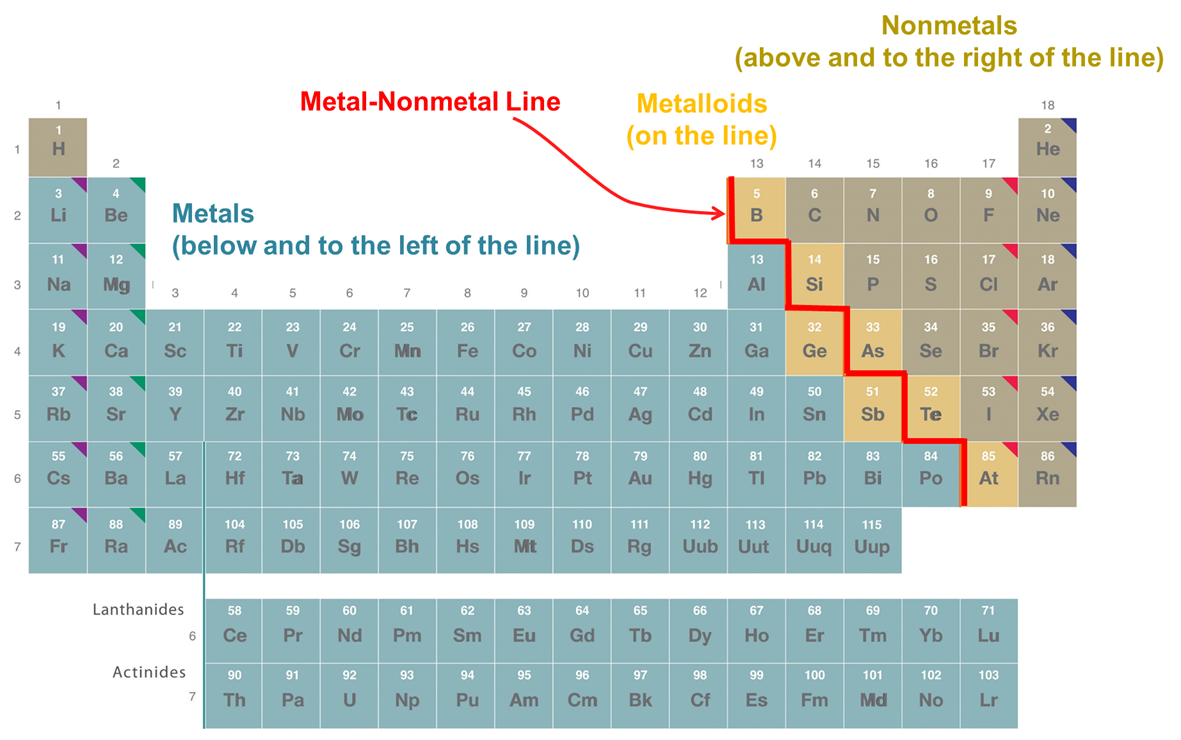
The elements can be placed in the periodic table. This document and associated figures are copyright 1995-2021 by Rob Toreki. The line begins at boron B and extends down to polonium Po.
The periodic table also known as the periodic table of the chemical elements is a tabular display of the chemical elementsIt is widely used in chemistry physics and other sciences and is generally seen as an icon of chemistryIt is a graphic formulation of the periodic law which states that the properties of the chemical elements exhibit a periodic dependence on their atomic numbers. The metals consist of the alkali metals alkaline earths transition metals lanthanides and actinides. But one thing I want to tell you that you may find a different definition of heavy metals in metallurgy physics as well as chemistry.
The metalloids separate the metals and nonmetals on a periodic table. Each category has distinct properties. Each alkali metal atom has a single electron in its outermost shell s-orbital which is loosely bound.
Name Atomic Number Atomic Mass Electron Configuration Number of Neutrons Melting Point Boiling Point Date of Discovery Crystal Structure. Lets find the halogens on our periodic table. Hydrogen is a chemical element with atomic number 1 which means there are 1 protons and 1 electrons in the atomic structureThe chemical symbol for Hydrogen is H.
Lets talk about one of the nonmetals now and that would be the halogens. Semiconductors Solid Liquid Gas Valence electrons Oxidation number Charge Add to my workbooks 28 Download file pdf Embed in my website or blog Add to Google Classroom. On many periodic tables a jagged black line see figure below along the right side of the table separates the metals from the nonmetals.
The position of an element provides information about its properties. As shown on the periodic table of the elements below the majority of the chemical elements in pure form are classified as metals. Its monatomic form H is the most abundant chemical substance in the Universe constituting roughly 75 of all baryonic mass.
Nonmetals-- if you have a solid nonmetal those solids would tend to be brittle not malleable like metals. What are Heavy Metals on the Periodic table. Well you have got the answer of Where are Nonmetals located on the Periodic Table But there are lot more things that you should know about the nonmetals like.
This page was last updated Monday September 3 2018 and has been accessed 771701 times since June 1 1996. Hydrogen is group 1 but exhibits few characteristics of a metal and is often categorized with the nonmetals. The non-metals exist in two of the three states of matter at room temperature.
The position of an element provides information about its properties. Most elements are metals with different properties to those of non-metals. One way to classify elements in the periodic table is by metals nonmetals and metalloids.
To Learn the major differences between Metals and Nonmetals. 9th through 12th grade Age. Hydrogen is a chemical element with atomic number 1 which means there are 1 protons and 1 electrons in the atomic structureThe chemical symbol for Hydrogen is H.
With a standard atomic weight of circa 1008 hydrogen is the lightest element on the periodic table. Periodic Table Trends Metals Nonmetals Metalloids Other contents. The metals are to the left of the line except for hydrogen which is a nonmetal the nonmetals are to the right of the line and the elements immediately adjacent to the line are the metalloids.
This general description is adapted from Shipman et al. The nonmetals are a diverse collection of elements but they share some common properties. The Periodic Table contains a lot of useful information on the elements.
The metals which have higher density or higher atomic mass are known as heavy metals. The periodic table of metals and nonmetals can be broken down to give you a sense of each elements characteristics. Metals nonmetals and metalloids make up the periodic table with metals constituting the large majority of all metals.
Metals of the s-block are highly electropositive and often form essentially ionic compounds with nonmetals especially with the highly electronegative halogen nonmetals. The alkaline earth metals make up group 2 of the periodic table from Be through Ra. Its monatomic form H is the most abundant chemical substance in the Universe constituting roughly 75 of all baryonic mass.
This group lies in the s-block of the periodic table. The p-block is on the right side of the standard periodic table and encompasses elements in groups 13 to 18. The alkali metals make up group 1 of the Table and comprise Li through Fr.
Most elements are metals with different properties to those of non-metals. As opposed to metals non-metallic elements are very brittle and cannot be rolled into wires or pounded into sheets. It seems appropriate to describe what is meant by metal in general terms.
Also many periodic tables have a stair-step line on the table identifying the element groups. Difference Between Metals and Nonmetals- The elements present on the extreme right side of the periodic tables are non-metal About 80 of the 105 elements in the periodic table are regarded as metals. They are grouped together in the middle to the left-hand side of the periodic table.
How To Identify Metals Nonmetals And Metalloids On The Periodic Table Youtube
How Can We Identify Elements As Metal Or Non Metals Quora

List Of Metals
Matter And Energy Metals Nonmetals And Metalloids Texas Gateway

Metals And Non Metals Of The Periodic Table

Metals Nonmetals Metalloids The Great Cams

Learning By Questions
8 1 1 1 The Metal Nonmetal Metalloid Distinction And The Metal Nonmetal Line Are Useful For Thinking About Trends In Elements Physical Properties Chemistry Libretexts


Komentar
Posting Komentar